













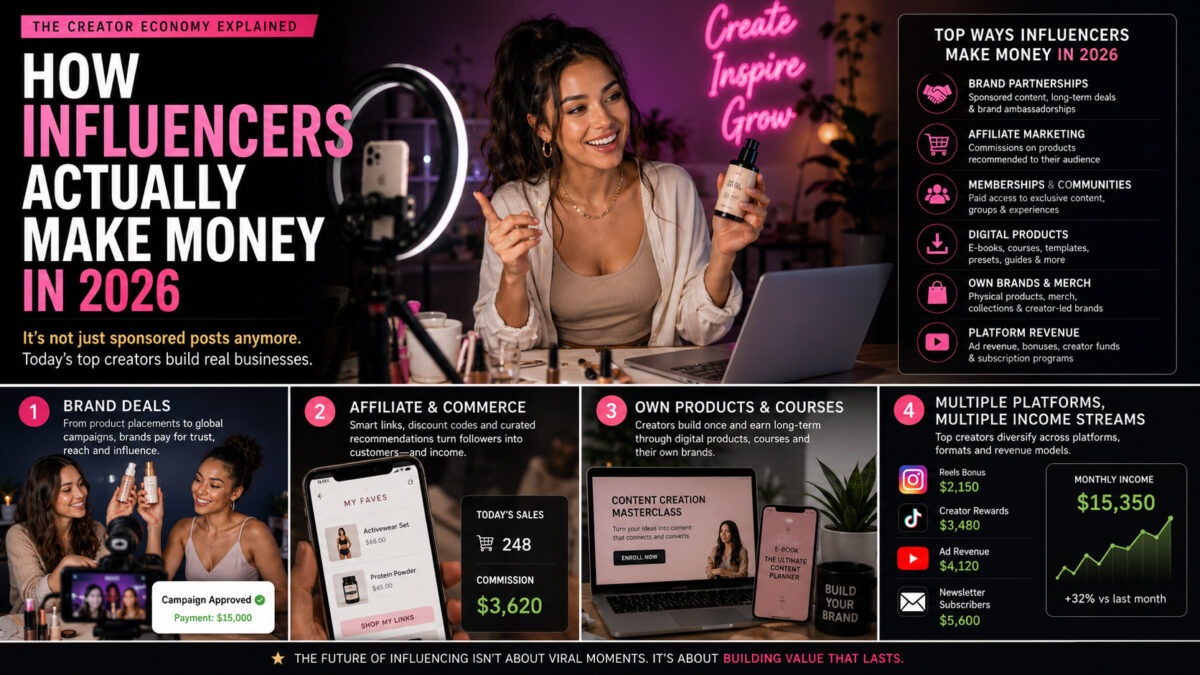
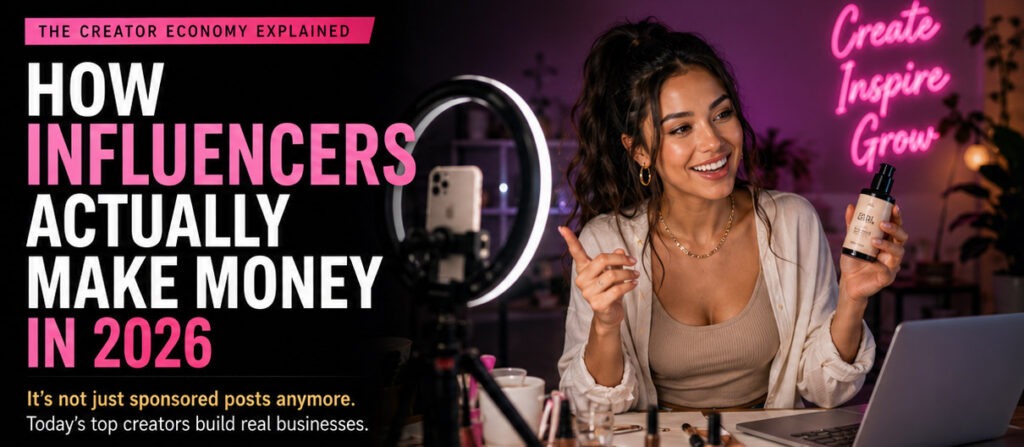
For years, people assumed influencers made money in one simple way: post a photo, mention a product, collect a paycheck.
That model still exists.
But in 2026, the creator economy looks very different.
Some creators with millions of followers struggle to turn attention into income, while others with smaller audiences quietly build businesses worth far more than people expect.
The biggest shift? Followers are no longer the product.
Ownership is.
Today’s creators earn through multiple income streams—and the most successful ones operate more like media companies than internet personalities.
Here’s how influencers actually make money in 2026.
The Old Model: Sponsored Posts
Brand deals still matter.
Companies continue paying creators to promote:
- Products
- Apps
- Services
- Entertainment releases
- Events
But sponsored posts are increasingly only one piece of the puzzle.
Creators now focus more on long-term partnerships rather than one-off campaigns.
A creator with fewer followers but stronger audience trust can sometimes outperform a much larger account.
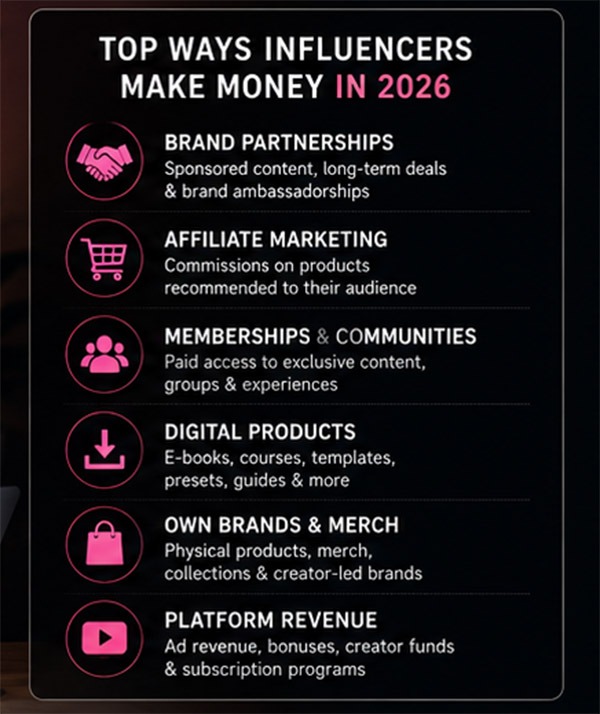
Affiliate Marketing Became Smarter
Affiliate income remains one of the biggest creator revenue sources.
The model is simple:
A creator recommends something → audience buys → creator earns commission.
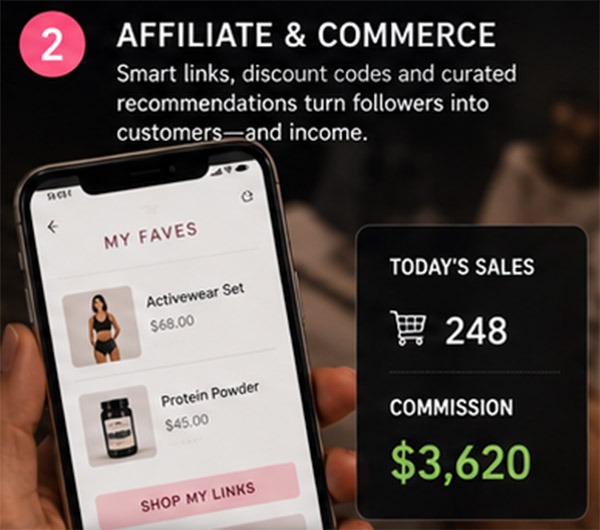
What changed?
Tracking improved.
Brands now reward:
- Repeat purchases
- Customer retention
- Higher-value audiences
Many creators earn steadily without constantly posting ads.

Memberships and Paid Communities
Influencers discovered something important:
You don’t need millions of followers.
You need a loyal audience.
Paid communities now include:
- Exclusive content
- Early access
- Group chats
- Digital clubs
- Premium newsletters
Even smaller creators can build recurring monthly income.

Digital Products Became Mainstream
One of the fastest-growing creator trends is selling digital products.
Examples:
- Courses
- Templates
- Presets
- E-books
- Guides
- Exclusive downloads
Unlike sponsorships, digital products can continue generating revenue long after launch.
Commerce and Creator Brands
Many influencers now launch:
The goal isn’t just reach.
It’s ownership.
Selling a product often creates more long-term value than selling attention.
Short Video Changed the Economics
Short-form content made growth easier.
Monetization became harder.
That pushed creators toward:
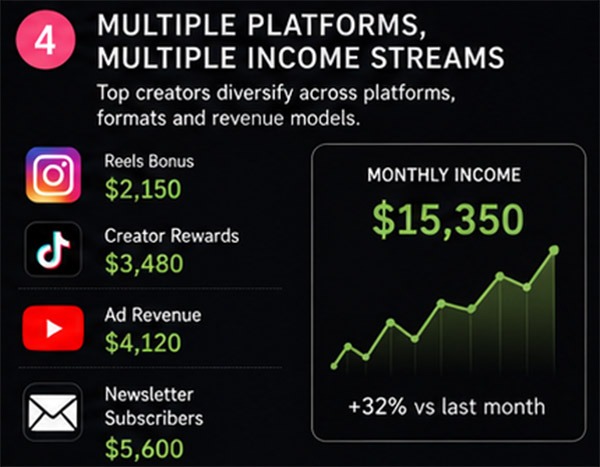
- Diversified revenue
- Multiple platforms
- Audience ownership
Views alone rarely guarantee income.
Conversion matters.
AI Changed Content Production
AI tools now help creators:
- Edit faster
- Generate ideas
- Localize content
- Repurpose videos
- Scale publishing
But easier creation also means more competition.
Originality became more valuable.
The Biggest Myth: More Followers = More Money
This idea breaks constantly.
Revenue depends on:
- Audience trust
- Niche
- Conversion
- Business model
- Retention
A creator with 100K engaged followers may outperform someone with millions.
What the Best Creators Actually Build
The strongest creator businesses usually combine:
Content + Community + Products + Ownership
That combination creates income that survives algorithm changes.
The future of influencing isn’t becoming famous.
It’s becoming sustainable.
FAQ
Can small influencers earn meaningful income?
Yes. Smaller creators often monetize more efficiently.
Are brand deals still important?
Yes, but fewer creators rely on them exclusively.
Is AI replacing influencers?
No. AI lowers production costs but audience connection still matters.
What matters more in 2026: followers or engagement?
Engagement and conversion usually matter more.
Related Articles
→ How Celebrity Net Worth Is Calculated
→ The Rise of AI in Entertainment
→ Why Streaming Changed Modern Fame