




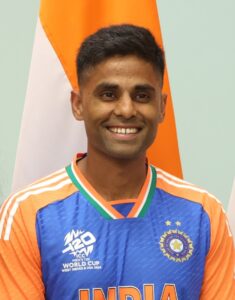









Indian cricket’s relationship with Hardik Pandya is genuinely unlike its relationship with any other active player — a mixture of awe at his match-winning capability, frustration at his fitness history, genuine affection from a substantial portion of the fanbase, and something approaching hostility from another portion, all existing simultaneously and intensifying around every significant development in his career. Understanding Hardik Pandya requires holding these contradictory responses in mind simultaneously rather than resolving them into a simpler verdict, because the contradictions are the story.
The Talent — What Makes Him Irreplaceable
Let us begin with the cricket, which is where the conversation about any player should start. Hardik Pandya is a genuine pace-bowling all-rounder at international level — a cricketer who can bat with power and intelligence in the top six of an international batting order and bowl with genuine pace and skill for his team’s full allocation of overs. This combination sounds straightforward until you appreciate how extraordinarily rare it is at Test and white-ball international level simultaneously.
India had, in the decades before Hardik’s emergence, periodically searched for a genuine pace-bowling all-rounder capable of contributing at the highest level in both disciplines without being significantly below standard in either. Kapil Dev’s retirement left a gap in this specific function that remained unfilled for thirty years. Hardik’s emergence as the credible answer to that three-decade question represents a contribution to Indian cricket’s squad construction possibilities that extends well beyond any individual performance statistic.
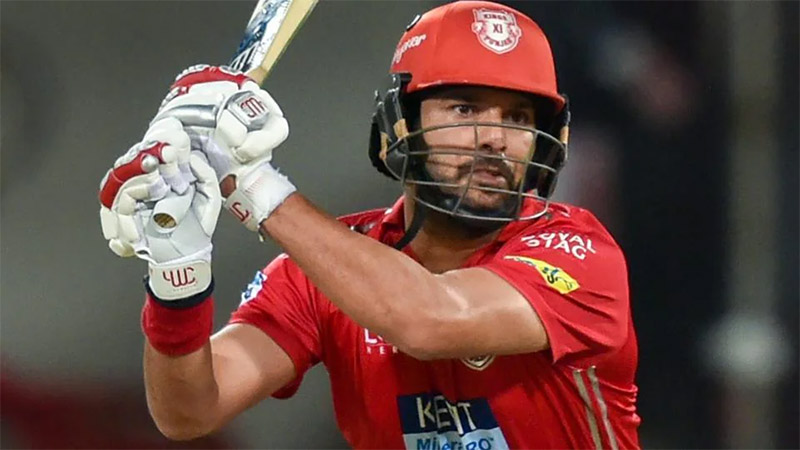
His batting, at its best, combines genuine power — he regularly clears boundaries that other batsmen of similar physical stature cannot — with intelligent shot selection that belies his reputation as a pure hitter. His finishing in T20 chases, specifically, has produced some of Indian cricket’s most important recent victories, including match-winning contributions in ICC tournament knockout matches where the pressure is at its absolute maximum.
The Fitness History
The legitimate criticism of Hardik Pandya as a cricketing asset — separated from whatever views one holds about him as a public figure — centres on his availability record rather than his ability. Recurring back injuries have interrupted his career at multiple critical junctures, most significantly the injury that caused him to miss a substantial portion of the 2019-2020 international calendar at what should have been his peak physical years.
The specific concern is not simply that he has been injured, but that the nature of his bowling action and his intense, high-impact batting style create genuine structural risk of recurring physical breakdown that may not be fully manageable through fitness protocols alone. India’s management team has, in recent seasons, employed a careful workload management approach — limiting his bowling overs in some formats, managing his bowling loads across back-to-back tournament fixtures — that has improved his availability without fully resolving the underlying physical uncertainty.
The Mumbai Indians Captaincy Controversy
The controversy that generated perhaps the most sustained public backlash against Hardik Pandya in recent years centred not on his cricket but on his return to Mumbai Indians as captain in 2024, which required the departure of Rohit Sharma from the franchise captaincy he had held for over a decade. The optics of this transition — perceived by many fans as commercially and personally motivated in ways that disrespected Rohit’s extraordinary contribution to MI’s five IPL titles — produced a level of sustained audience hostility during IPL 2024 that was genuinely unprecedented in the tournament’s history for an Indian player.
The subsequent pressure of captaining a struggling MI side while managing this public disapproval appeared to affect Hardik’s performance in ways that made an already difficult situation considerably worse, creating a feedback loop between external criticism and on-field results that tested both his mental resilience and his cricketing qualities in unusually extreme combination.
The World Cup Redemption
India’s T20 World Cup 2024 triumph in the West Indies provided Hardik with the most significant redemption narrative of his career to that point. In the tournament’s final against South Africa, with India needing to defend fifteen runs off the last over with the match and the World Cup in the balance, it was Hardik who was given the ball for the decisive over — and who delivered, holding his nerve and his skill under the most extreme pressure that international cricket provides to send India to their second T20 World Cup triumph.
That performance didn’t resolve the broader public ambivalence toward Hardik, but it provided the undeniable evidence of his match-winning value precisely when that value is most required — a pattern that has characterised the most significant individual performances of his career and that forms the foundation of any honest case for his continued inclusion regardless of off-field noise.
Conclusion
Hardik Pandya in 2026 remains exactly what he has always been — an exceptional, match-winning cricketer whose talent for the decisive moment is genuine and proven, accompanied by fitness history and off-field controversies that generate legitimate debate about both his reliability and his public conduct. Indian cricket is objectively better with him available and performing than without him, a statement that the evidence of his major tournament contributions makes difficult to dispute seriously. The more interesting question, perhaps, is whether the next chapter of his career can produce the sustained availability and public rehabilitation that his talent has always deserved and that Indian cricket’s long-term interests genuinely require.
Separating the Noise From the Numbers
Strip away the off-field headlines and social media scrutiny, and Pandya’s actual playing record, an IPL title as captain, consistent match-winning performances with both bat and ball, holds up better than the controversy-driven narrative around him often suggests. That gap between public perception and statistical reality is fairly common for players who attract this much tabloid attention.
The Captaincy Question
Pandya’s leadership has drawn as much debate as his personal life, with critics questioning his tactical decisions during high-pressure run chases. Supporters point to his IPL title as GT captain as evidence of genuine leadership ability, a reminder that captaincy assessments in Indian cricket are rarely made purely on results alone.