







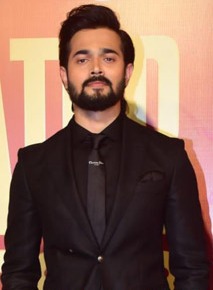

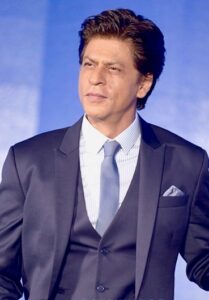



For most of the past decade, deepfakes were treated as a novelty problem, unsettling but rare. By 2026, they’d become a genuine legal crisis for Bollywood, with a wave of A-list actors heading to court to stop AI from stealing their faces, voices, and reputations. Here’s what actually happened, and what it means going forward.

The Preity Zinta Case
In June 2026, Preity Zinta filed suit before the Bombay High Court after her legal team documented hundreds of instances of manipulated content featuring her circulating across websites and social media. The court found she had established a prima facie case and directed Google, Meta, X Corp, and several websites to remove the identified AI-generated content, including deepfake videos, digitally morphed photographs, and content falsely portraying or imitating her. The judge explicitly noted that unauthorised use of a person’s image can infringe personality rights, publicity rights, and moral rights, while affecting dignity under Article 21 of India’s Constitution.
Arjun Kapoor’s Case Set an Important Precedent
Arjun Kapoor approached the Delhi High Court in April 2026 after third parties allegedly misappropriated his identity, including his voice and image, for unauthorised merchandise and deepfake content. The court restrained third parties from unauthorised use of his name, voice, or image, but notably didn’t issue a blanket takedown order for all public-figure-related content, a distinction legal analysts say will shape how future Bollywood personality rights cases get argued.
A Wave, Not an Isolated Incident
Kapoor and Zinta weren’t isolated cases. NTR Jr., R. Madhavan, and Shilpa Shetty all secured court orders in December 2025 blocking unauthorised deepfakes, voice clones, and synthetic content. Cricket legend Sunil Gavaskar won similar protection against AI misuse of his name and likeness. Delhi courts have also granted protection to Karan Johar, Abhishek Bachchan, and Jackie Shroff in related cases, an unusually concentrated run of celebrity AI litigation in a single year.
The Legal Gap These Cases Are Filling
India doesn’t have a dedicated statute specifically covering personality rights or deepfakes, which means courts have been building protections case by case using existing legal concepts: the Copyright Act, constitutional dignity protections, and common law personality rights. In Arijit Singh v. Codible Ventures LLP, the Bombay High Court held that AI mimicking a performer’s vocal attributes without authorisation infringed personality, publicity, and moral rights, a ruling that’s since been cited repeatedly in later cases involving voice cloning specifically.
Courts Are Moving Fast, Because They Have To
A synthetic endorsement or deepfake video can reach millions of viewers before any normal legal process could realistically intervene. Indian courts have adapted by issuing same-day ex-parte interim relief, dynamic injunctions that automatically extend to mirror or copycat websites without requiring a fresh lawsuit, and “Ashok Kumar” orders that let plaintiffs act against unknown, unidentified defendants. This procedural speed has become just as important as the underlying legal theory in actually stopping the spread of harmful content.
Why This Matters Beyond the Named Plaintiffs
Each of these rulings functions as an informal template for the next case, since India still lacks comprehensive deepfake legislation. Legal commentators expect this wave of litigation to intensify through 2026 and 2027 as generative AI tools become more accessible to bad actors, making the current run of court orders less a resolved chapter than an early, evolving body of precedent.
What This Means for Working Actors
For actors and public figures without the resources to pursue emergency litigation, these cases matter because they establish that Indian courts are willing to act quickly and broadly, covering everything from fake endorsements to nonconsensual explicit content, rather than treating AI-generated harm as somehow exempt because of how it was created. That legal groundwork is likely to make future cases faster and more predictable to bring, even for actors without a major star’s legal team behind them.
How These Deals Differ From Ordinary Copyright Disputes
What makes these cases legally distinct from a standard copyright claim is that they’re not primarily about ownership of a creative work, they’re about control over someone’s actual identity being used without consent, often for financial gain by a third party who has no relationship with the celebrity at all. That framing, treating identity theft through AI as its own category of harm rather than a subset of ordinary IP infringement, is part of why courts have leaned on constitutional dignity protections alongside copyright law.
The International Comparison
India isn’t alone in grappling with this. Several U.S. states have passed or strengthened publicity rights laws specifically addressing AI likeness misuse in recent years, and entertainment unions internationally have pushed hard for contractual protections against unauthorised AI replication of performers. What’s notable about India’s approach is that it’s happening almost entirely through judicial interpretation of existing law, rather than dedicated legislation, making the courts themselves the primary policy-makers in this space for now.
What Ordinary Public Figures Can Learn From These Cases
Even for public figures without Bollywood-level resources, these rulings establish a workable playbook: document instances of misuse thoroughly, act quickly given how fast content spreads, and lean on the combination of copyright, constitutional dignity, and personality rights arguments that have proven successful in court so far. That template is likely to become increasingly accessible as more lawyers specialise in this exact area of practice.
What Platforms Are Doing on Their End
Beyond individual lawsuits, pressure has grown on the platforms themselves, Google, Meta, and X among them, to build faster detection and takedown systems for AI-generated impersonation rather than waiting for a court order in every single case. Several of the rulings covered here explicitly name these platforms as respondents, a sign that courts increasingly view platform-level responsibility, not just the original uploader’s, as part of the solution.
For a broader look at how AI is reshaping the production side of Bollywood, not just the legal risks facing performers, see our companion piece linked below.