














Walk onto some of Bollywood’s newer production floors in 2026 and you might not hear a single camera shutter. At the Collective Artists Network’s Galleri5 studio in Bengaluru, entire mythology-based projects are being built almost entirely with AI tools, part of a broader transformation reshaping how Indian films get made, dubbed, and distributed.
The Numbers Behind the Shift
Industry figures cited by multiple outlets this year describe AI cutting production costs to roughly one-fifth of traditional filmmaking expenses for AI-heavy projects, while slashing production timelines by nearly 75%. For an industry that produces more films annually than any other country in the world, that kind of efficiency gain is difficult for studios to ignore, especially with theatrical attendance in India having dropped from over a billion admissions in 2019 to around 832 million in 2025.
AI-Generated Mythology Is Having a Moment
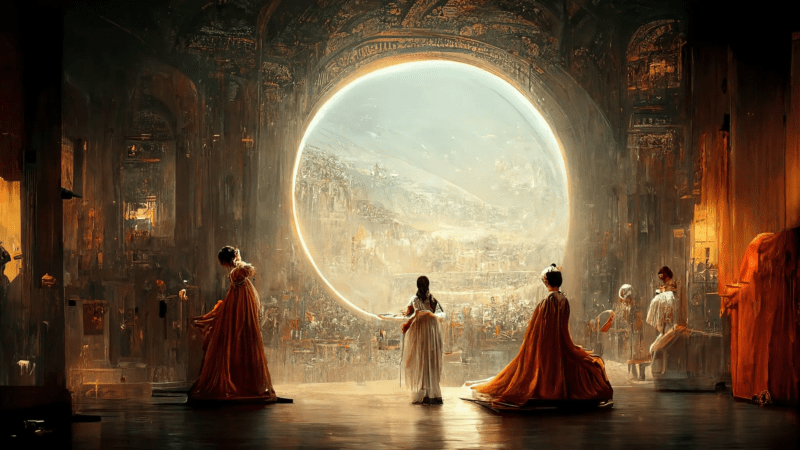
Mythology and fantasy have emerged as the genres where AI filmmaking makes the most obvious sense, since these stories require expensive, elaborate visuals, gods flying, epic battle scenes, that would otherwise demand huge VFX budgets. Filmmakers at Galleri5 have used AI tools to produce scenes from the Ramayana and Mahabharata, including sequences depicting Hanuman flying while carrying a mountain, rendered entirely through generative tools rather than traditional VFX pipelines.
Global Tech Giants Are Placing Early Bets
This isn’t purely an India-grown trend. Google partnered with director Shakun Batra to produce a five-part cinematic series using its Veo 3 video-generation and Flow AI tools, explicitly framing the collaboration around helping independent filmmakers create sequences that would otherwise be financially out of reach. Microsoft, separately, has been providing AI computing power to Indian studios and talent agencies pursuing similar projects, describing the partnerships as helping “shape the next wave of global storytelling.”

Dubbing: The Clearest Win So Far
Of everything AI has touched in Indian filmmaking, dubbing is where the technology has delivered the least controversial, most immediately useful results. Bengaluru-based NeuralGarage built AI dubbing technology that synchronises translated audio with a performer’s actual lip movements, technology already used commercially, including on Yash Raj Films’ War 2 for its Telugu-language release. Given India’s 22 official languages, tools like this solve a genuinely expensive, longstanding production bottleneck rather than replacing anything creative.
Not Everyone Is Convinced
The reception hasn’t been universally positive. One AI-heavy production reportedly drew an IMDb score as low as 1.4, with viewers citing lip-sync errors and a general lack of authenticity, sparking what one streaming executive called “a healthy debate on AI’s role in creative industries.” Critics like media scholar Jonathan Taplin have argued more broadly that leaning on AI risks undermining cinema’s history and could open the door to a flood of low-quality content.
Where the Line Is Being Drawn
Industry leaders interviewed across multiple reports this year have converged on a similar framing: AI is expected to become standard practice over the next decade, but as a tool that supports filmmakers rather than a replacement for human creative judgment. That distinction, AI as assistant rather than author, is likely to remain the industry’s working consensus for as long as audiences keep noticing, and reacting to, the difference.
What This Means for Indian Cinema’s Global Position
Indian VFX companies already collaborate extensively with Hollywood and European productions, and deeper AI capability is strengthening that position further, giving Indian studios a genuine edge in an increasingly global, cost-conscious production market. As international demand for Indian content grows through streaming platforms, faster and cheaper AI-assisted production could end up being a competitive advantage well beyond the domestic box office.
Independent Filmmakers Stand to Gain the Most
While the headlines focus on major studios, the more significant long-term shift may be at the independent level. Google’s own framing of its Shakun Batra partnership emphasised helping artists create complex sequences that would otherwise be financially out of reach, suggesting AI’s biggest democratising effect may end up being on smaller, independent productions rather than the big-budget tentpoles currently generating the most attention.
The Job Market Question
Faster, cheaper production naturally raises questions about employment across VFX, dubbing, and post-production roles that AI can now partially automate. Industry conversations have so far focused more on redefining these roles, artists supervising and refining AI output rather than manually executing every frame, than on wholesale job elimination, though how that balance actually plays out over the next few years remains genuinely unsettled.
What to Watch Next
Expect the next wave of AI filmmaking stories to move beyond cost and speed toward quality and audience acceptance, whether AI-heavy productions can consistently match traditional filmmaking’s emotional and technical polish, not just its budget efficiency. The mixed reception some AI-heavy projects have already received suggests audiences are willing to embrace the technology selectively, but not unconditionally.
Why Mythology Won’t Be the Only Genre for Long
While mythology and fantasy have led the way precisely because they demand expensive visuals AI can now approximate cheaply, industry watchers expect the same tools to move into contemporary genres, period dramas, action, even romance, once audience trust and technical polish catch up. The genres adopting AI first are simply the ones where the cost savings currently outweigh any quality trade-off most clearly, not necessarily where the technology will ultimately have its biggest long-term impact.
For more on how this technology is reshaping the people in front of the camera, not just behind it, see our companion piece on deepfakes and personality rights, linked below.
What Happens to Traditional VFX Studios
India’s established VFX houses, long known for high-quality outsourced work for Hollywood, face an interesting adjustment as AI tools handle more routine effects work. Rather than disappearing, many are repositioning as AI-supervision specialists, offering the technical judgment to guide and refine generative output rather than manually building every frame from scratch. That shift in skillset, not headcount elimination, is how most industry insiders currently expect the transition to play out.
Whatever direction the technology takes next, the underlying story remains the same: Indian filmmaking has always found ways to produce more content for more languages at lower cost than any other industry in the world, and AI is simply the latest tool in that long tradition.