













The story of Indian actors in Hollywood is not a single linear narrative of steady progress but a more complex history of individual pioneers, occasional breakthroughs, and long periods in which the structural barriers between the world’s two largest film industries seemed essentially insurmountable. What has changed in the past decade — and particularly in the past five years — is the pace and nature of that change, as Indian cinema’s growing global commercial significance has shifted the dynamic from Indian actors seeking Hollywood opportunities to Hollywood actively pursuing Indian talent for projects where their specific star power and audience connections add genuine value.
Irrfan Khan — The Gold Standard
Any honest discussion of Indian actors in Hollywood must begin with Irrfan Khan, who remains, several years after his death in 2020, the clearest benchmark of what Indian acting talent can achieve in international cinema at the highest level of artistic ambition. His Hollywood filmography spans an extraordinary range — from the Oscar-winning ensemble of Slumdog Millionaire to the blockbuster ecology of Jurassic World to the literary adaptation prestige of Life of Pi to the thriller mainstream of Inferno — and across all of these contexts, his performances maintained a quality and specificity that made him recognisable as a genuinely great actor regardless of the specific film’s overall merit.
What distinguished Irrfan’s Hollywood career from many other crossover attempts was his refusal to simplify his performance style for international audiences — he brought the same depth, the same quiet intensity, and the same resistance to the obvious emotional beat that characterised his finest Indian cinema work. He neither Anglicised his presence nor exoticised it for Western consumption, instead inhabiting every role with a universality of feeling that transcended cultural specificity. He remains the model for every Indian actor who subsequently attempts the crossing.
Om Puri and Naseeruddin Shah — The Pioneers
Before Irrfan, before Priyanka, before the current generation of Hollywood-pursuing Bollywood stars, Om Puri and Naseeruddin Shah established that Indian actors could participate in significant international productions as genuine contributors rather than tokens of cultural diversity. Both appeared in major British and American productions through the 1980s and 1990s — Om Puri most memorably in East is East and My Son the Fanatic, Naseeruddin Shah in The League of Extraordinary Gentlemen and various international co-productions — building reputations in international cinema circles that preceded the broader industry’s awareness of Indian acting talent.
Anil Kapoor — The Slumdog Connection
Anil Kapoor’s post-Slumdog Millionaire Hollywood career demonstrated a different model of Indian crossover success — the veteran Bollywood star leveraging a specific film’s international breakthrough to access American projects that his earlier career would not have generated. His role in the American television series 24 alongside Kiefer Sutherland brought him to an American television audience that knew his face from Slumdog but had not previously followed his Bollywood career, demonstrating that Indian star recognition in the West was buildable through specific high-profile projects rather than requiring years of gradual American career development.
Priyanka Chopra Jonas — The Systematic Builder
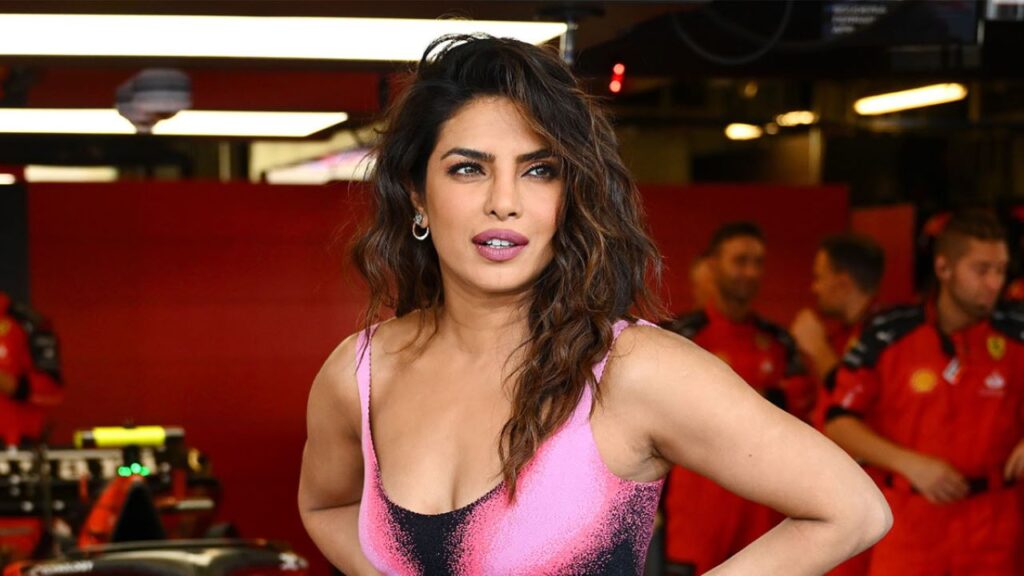
Priyanka’s Hollywood career has already been assessed in detail elsewhere in this series, but her place in the history of Indian actors in Hollywood deserves emphasis here: she is the first Indian actress to systematically build an American career from scratch as a parallel trajectory to an ongoing Bollywood career, rather than treating Hollywood as either a one-off experiment or a full replacement for her Indian industry presence.
Deepika Padukone — Franchise Entry
Deepika’s Hollywood debut in xXx: Return of Xander Cage alongside Vin Diesel represented a different pathway — entering an established franchise at a significant level through the franchise’s interest in expanding its global audience base. While the film was not a critical success, it introduced Deepika to international cinema audiences and demonstrated her action capability in a format that Hollywood’s franchise infrastructure can deploy globally.
Alia Bhatt — The New Template
Alia Bhatt’s Heart of Stone debut represents the most recent evolution of the Indian Hollywood crossover story — entering at co-lead level in a major studio production, carrying her existing Indian star recognition as a genuine asset rather than something to be concealed, and doing so while maintaining active Bollywood career momentum rather than pausing Indian cinema to pursue international opportunities.
This simultaneity — the refusal to choose between industries — may be the defining characteristic of the next generation of Indian Hollywood crossovers, reflecting a world in which Indian cinema’s international standing has risen sufficiently that leveraging both platforms simultaneously is both possible and strategically superior to full transition.
The Supporting and Character Role Tradition
Alongside these headline crossover stories, dozens of Indian actors have built significant bodies of work in Hollywood through supporting roles, character parts, and recurring television appearances — Anupam Kher in Silver Linings Playbook, Archie Panjabi in The Good Wife, Parminder Nagra in ER and Bend It Like Beckham, Naveen Andrews in Lost. These careers deserve recognition as part of Indian cinema’s Hollywood story even when they don’t generate the same headline attention as leading role crossovers.
Conclusion
Indian actors in Hollywood in 2026 represent a story that is still very much in progress — a narrative whose trajectory has shifted decisively toward Indian talent’s growing global commercial significance creating genuine Hollywood demand rather than the earlier model of individual talent overcoming structural barriers through sheer ability alone. Irrfan Khan showed what was possible at the highest artistic level. Priyanka showed what was possible at the mainstream commercial level. Alia’s generation is discovering what is possible when both levels are achievable simultaneously. The next chapter of this story is already being written.
Why This List Keeps Growing
What’s changed most in the past decade isn’t just the number of Indian actors working in Hollywood, it’s the size and seriousness of the roles they’re being offered, lead parts and major streaming series rather than small supporting roles defined primarily by accent or ethnicity. That shift reflects Hollywood’s own growing recognition of India as both a talent pool and a genuinely significant audience.