










Rating: 4 out of 5
Some films announce their intentions within the first five minutes, and Jawan is unambiguous about exactly what kind of experience it intends to deliver. Director Atlee, making his Hindi cinema debut after establishing himself as one of Tamil cinema’s most reliably commercial filmmakers, wastes no time establishing the film’s relentless, maximalist energy — and across its two-and-a-half-hour runtime, that energy rarely lets up.
The Story
Jawan centres on Shah Rukh Khan in dual roles as both an estranged father and son, their parallel narratives weaving together a revenge story that begins as personal grievance and expands into something considerably more ambitious — a sweeping commentary on systemic corruption touching farmer suicides, healthcare negligence, and electoral accountability. This is, notably, more politically direct material than typical Bollywood blockbuster fare tends to engage with, and the film deserves credit for embedding these themes within its commercial entertainer framework rather than treating them as mere window dressing.
The plot mechanics, admittedly, require some suspension of disbelief — Atlee’s screenplay, co-written with S. Ramanagirivasan, prioritises emotional and thematic momentum over rigorous logical consistency, a trade-off that mirrors the conventions of South Indian mass cinema more closely than typical YRF or Dharma productions tend to.
Shah Rukh Khan’s Performance
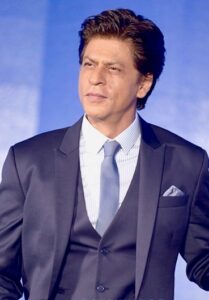
This is, by any measure, Shah Rukh Khan at his most physically committed in years. The dual role structure allows him to explore two genuinely distinct registers within the same film — a warm, paternal warmth in one timeline and a more hardened, vengeful intensity in the other — and he navigates the transition between these modes with the kind of effortless control that three decades of stardom has clearly refined.
His action sequences, while inevitably enhanced by stunt choreography and editing, are convincing in their physical commitment, particularly given that Shah Rukh was in his late fifties during filming, a fact the film’s marketing notably leaned into rather than concealed. The emotional scenes — particularly an extended cameo appearance from Deepika Padukone that connects directly to the film’s central mystery — represent the film’s most affecting moments, grounding the spectacle in genuine pathos.
The Action Choreography
Atlee’s background in large-scale Tamil action cinema is immediately evident in Jawan’s set pieces, which favour bold, almost operatic staging over the grounded realism that has characterised much recent Hollywood and Bollywood action cinema. The prison break sequence early in the film, and a subsequent train heist that serves as the film’s centrepiece action set piece, rank among the most ambitiously staged action sequences in recent Hindi cinema, combining genuine scale with the kind of audience-pleasing, slow-motion heroic framing that has become something of an Atlee signature.
The supporting ensemble cast — featuring an all-female team of operatives working alongside Shah Rukh’s character — adds a notable dimension to the film’s action choreography, giving multiple performers genuine moments of physical heroism rather than relegating them to background roles, a choice that distinguishes Jawan from many of its genre peers.
Where the Film Falters
Jawan’s ambition occasionally works against it. The film’s second half, while never boring, does begin to feel somewhat overlong as the narrative juggles multiple converging storylines and an expanding cast of characters whose individual arcs receive varying degrees of development. Several supporting characters, despite committed performances, remain somewhat thinly sketched, existing primarily to serve specific plot functions rather than developing genuine independent depth.
The film’s social messaging, while admirable in its directness, occasionally becomes repetitive in its delivery, with certain thematic points reiterated through dialogue when the visual storytelling had already communicated them effectively. A tighter edit, particularly in the film’s middle stretch, likely would have strengthened the overall pacing without sacrificing any of its thematic ambition.
The Vijay Sethupathi Factor
Vijay Sethupathi’s villain performance deserves specific mention as one of Jawan’s genuine strengths, providing a worthy antagonist whose menace feels organic rather than cartoonish, even within the film’s heightened, larger-than-life register. His scenes opposite Shah Rukh carry genuine tension, elevating material that, in less capable hands, might have felt purely functional.
Technical Craft
Beyond its narrative and performances, Jawan benefits considerably from genuinely impressive production values — cinematography that captures both intimate emotional moments and large-scale action with equal confidence, and a soundtrack and background score that effectively amplifies the film’s emotional beats without overwhelming them, a balance that not all maximalist commercial cinema manages successfully.
Verdict
Jawan succeeds precisely because it delivers exactly what it promises from its opening moments — Shah Rukh Khan operating at peak commercial charisma, paired with Atlee’s confident, large-scale directorial vision and genuine thematic ambition that elevates the material beyond pure spectacle, even when the execution doesn’t always match the ambition. While the second half’s pacing issues prevent it from achieving true greatness, Jawan remains a thoroughly entertaining, occasionally genuinely moving theatrical experience that rewards exactly the kind of big-screen viewing it was designed for. Now streaming on Netflix India with Hindi audio and subtitle options available.
Why Jawan Worked as Mass Entertainment
Director Atlee brought a distinctly Tamil-cinema sensibility to Jawan, unapologetic mass entertainment built around a social message, rather than the more restrained Bollywood blockbuster formula. That cross-industry influence is part of why Jawan felt different from a typical Shah Rukh Khan release, and part of why it resonated with such a broad audience.

How It Compares to Pathaan
Released just months after Pathaan, Jawan intentionally avoided repeating the same formula. Where Pathaan leaned into globe-trotting spy spectacle, Jawan grounded its action in domestic social issues, prison reform, healthcare access, electoral accountability, wrapped inside a mass-entertainer structure. That willingness to tackle heavier themes without losing its commercial instincts is a big part of why critics rated it the stronger of Shah Rukh Khan’s two 2023 releases.
Whatever your take on its length or its more theatrical action beats, Jawan succeeded at exactly what it set out to do: give Shah Rukh Khan’s biggest fanbase a genuine mass-entertainer while sneaking in a message most Bollywood blockbusters wouldn’t dare attempt at this scale.