













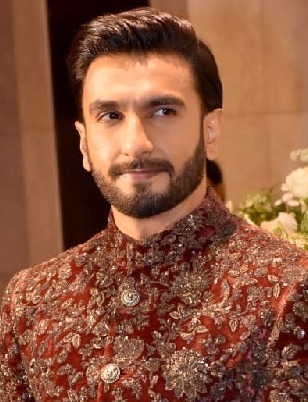
Few actors in contemporary Bollywood approach their craft with the sheer physical and emotional totality that Ranveer Singh brings to every role. Since bursting onto the scene in 2010, he has built a filmography defined not by repetition but by reinvention — moving fluidly between menacing villain, street-smart rapper, period romantic hero, and goofy comic lead, often within the same two-year stretch. Ranking his work means grappling with just how wide that range truly is.
1. Padmaavat (2018) — The Villain Who Redefined the Word
Sanjay Leela Bhansali’s Padmaavat gave Ranveer the role of Sultan Alauddin Khilji, and what he did with it remains, by wide critical consensus, one of the finest villain performances in the history of Hindi cinema. Khilji is not a cartoonish antagonist; he is feral, intelligent, and genuinely frightening, a man whose hunger for conquest is matched only by his contempt for the codes of honour around him.
Ranveer reportedly underwent significant physical transformation for the role, adopting an unkempt appearance, guttural voice, and predatory body language that critics described as unsettling in the best possible way. The performance earned him a Filmfare Award and is frequently cited in conversations about the greatest antagonist performances Indian cinema has ever produced — a remarkable feat for an actor primarily known, at that point, for romantic and comic roles.
2. Gully Boy (2019) — Authenticity Over Spectacle
If Padmaavat showed Ranveer’s capacity for theatrical excess, Gully Boy revealed the opposite register entirely. Playing Murad, a young man from Mumbai’s Dharavi slum who finds his voice through underground rap, Ranveer delivered a performance built on restraint and authenticity rather than spectacle.
He trained extensively in rap and Mumbai street slang for the role, and the result is a performance that feels lived-in rather than performed. Gully Boy went on to become India’s official submission to the Academy Awards that year, and Ranveer’s portrayal of a young artist navigating poverty, family expectation, and ambition struck a chord with audiences who had never previously associated him with this kind of grounded realism.
3. Band Baaja Baaraat (2010) — Where It All Began
Ranveer’s debut remains one of the most assured first performances by any Bollywood lead in recent memory. Playing Bittoo, an ambitious but undisciplined young wedding planner opposite Anushka Sharma, he brought an effortless, natural charisma that made the film an unexpected sleeper hit and announced him as a genuine star rather than a one-film novelty.
What stands out watching Band Baaja Baaraat today is how little of his now-signature flamboyance is on display — this is a quieter, more grounded Ranveer than audiences would come to know, proof that his range was present from the very beginning, even before the industry knew quite what to do with it.
4. Bajirao Mastani (2015) — Period Romance at Full Intensity
His second collaboration with director Sanjay Leela Bhansali cast Ranveer as the historical Maratha warrior Peshwa Bajirao, a role demanding both physical command and deep emotional vulnerability in his forbidden love for Mastani, played by Deepika Padukone. The film’s now-iconic song sequence Deewani Mastani showcased a side of Ranveer rarely seen before — restrained, regal, quietly devastated.
Critics praised the genuine chemistry between Ranveer and Deepika, who were then a real-life couple, and the film cemented Bhansali and Ranveer’s creative partnership as one of the most fruitful actor-director collaborations in contemporary Bollywood.
5. Rocky Aur Rani Kii Prem Kahaani (2023) — Comedy with Heart
Karan Johar’s lavish romantic comedy gave Ranveer the chance to return to his comic roots while incorporating the maturity he had developed across a decade of varied roles. Playing a wealthy, exuberant Punjabi heir who falls for a sharp, progressive Bengali journalist played by Alia Bhatt, Ranveer balanced broad comedy with genuine emotional beats around family, tradition, and changing gender expectations.
The film proved that even in pure entertainment mode, Ranveer brings a level of commitment and specificity to his comic timing that elevates material which, in lesser hands, might have felt purely formulaic.
Honourable Mentions
Simmba (2018) showed his ability to anchor a mass-market commercial action entertainer, becoming one of his biggest box office hits and proving he could carry a film built purely on commercial spectacle rather than artistic ambition. 83 (2021), in which he played cricket legend Kapil Dev in the story of India’s historic 1983 World Cup victory, demonstrated a different kind of discipline — a controlled, almost understated performance built around physical mimicry and quiet leadership rather than the larger-than-life energy audiences typically expect from him.
What Makes Ranveer Different
What ultimately separates Ranveer Singh from many of his contemporaries is the absence of a comfort zone. Most leading actors in any film industry eventually settle into a recognisable type that audiences come to expect and that studios continue to cast them in for commercial safety. Ranveer has actively resisted this, alternating between villain, rapper, period hero, and comic lead often within the same eighteen-month window, a pattern that suggests a deliberate career philosophy rather than mere opportunism.
Conclusion
Ranveer Singh’s filmography, taken as a whole, reads less like a typical Bollywood leading man’s career and more like the body of work of a character actor who happens to also be a movie star. From the gentle naturalism of Band Baaja Baaraat to the terrifying intensity of Padmaavat, from the street-level authenticity of Gully Boy to the lavish romantic comedy of Rocky Aur Rani, he has consistently sought out roles that stretch rather than reinforce his established image — and Bollywood is genuinely more interesting for it.
What Makes Ranveer Different From His Peers
What separates Ranveer from many of his contemporaries is his refusal to repeat himself. Few actors move as convincingly between a period epic, a street-rap drama like Gully Boy, and a maximalist action franchise within the same decade. That range is exactly why his filmography rewards ranking in the first place, there’s genuinely no single template to his best work.